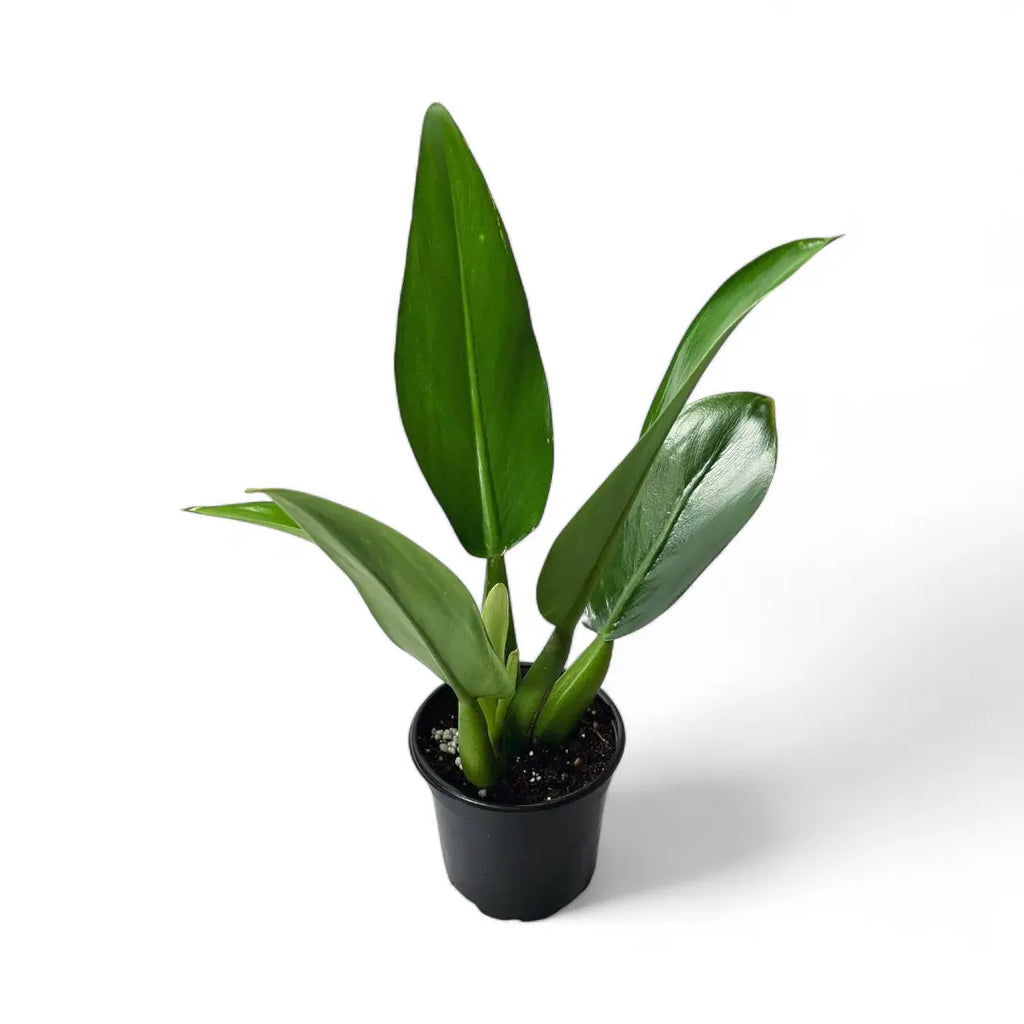
philodendron fat boy Philodendron Martianum 'Fat Boy'
SKU: 74670772959
philodendron fat boy

philodendron fat boy Philodendron Martianum 'Fat Boy'

Sale price$19.16 Regular price$21.29
Save 10%

Pay in installments of $5.32 with ShopPay, AfterPay and Klarna

Shipping Estimate
USA
  • USA
  • CAN

Ships within 48 hours · Estimated delivery Jul 6 - Jul 11

Promo Codes Available:

For Your Every Summer RSVP, with Code: SUMMER15

Description

philodendron fat boy Philodendron Martianum 'Fat Boy'The name explains itself the moment you see it. Every petiole on the Philodendron Martianum 'Fat Boy' is dramatically swollen inflated, bulbous, and hollow, like a series of fat green sausages holding up the broad, glossy dark green leaves above. No other Philodendron looks quite like this. Named in honour of Carl Friedrich Philipp von Martius, the great German botanist who spent years cataloguing the flora of Brazil's Amazon basin, martianum is a

The name explains itself the moment you see it. Every petiole on the Philodendron Martianum 'Fat Boy' is dramatically swollen — inflated, bulbous, and hollow, like a series of fat green sausages holding up the broad, glossy dark-green leaves above. No other Philodendron looks quite like this. Named in honour of Carl Friedrich Philipp von Martius, the great German botanist who spent years cataloguing the flora of Brazil's Amazon basin, martianum is a species from Brazil's Atlantic rainforest and rocky outcroppings — a plant equally at home growing on tree trunks and bare cliff faces, which explains its unusually tough, drought-tolerant character. The swollen petioles are not just a visual quirk; they are water storage organs, making this a semi-succulent Philodendron that tolerates dry spells far better than most of its genus. New leaves emerge with a warm bronze flush before deepening to the rich, glossy green of a mature plant. It grows as a self-heading, compact rosette — no climbing, no moss pole, no drama — and is one of the most genuinely low-maintenance collector aroids available.

💡 The Swollen Petioles — Water Storage, Not a Defect The dramatically inflated, hollow petioles of Philodendron martianum are its most distinctive feature and its most practical one. They function as water storage organs — the plant draws on the moisture held within them during dry periods, making it significantly more drought-tolerant than most Philodendrons. This semi-succulent adaptation is why the Fat Boy should be treated more like a succulent-philodendron hybrid than a typical aroid: allow the soil to dry much further between waterings than you would for other Philodendrons, and never keep the root zone perpetually moist. The petioles will appear visibly plumper on a well-hydrated plant and slightly softer when the plant is ready for water.
🌿 Self-Heading Rosette — No Pole, No Climbing Philodendron martianum is a non-vining, self-heading species that grows as a compact, upright clump. It does not climb, does not trail, and needs no support structure. New leaves push upward and outward from the central growing point, building a layered rosette that displays the bronze new growth at the centre against the mature dark-green outer leaves. Rotate the pot a quarter turn every 2–3 weeks for even, symmetrical growth. Its compact, structured habit makes it ideal for desks, shelves, and tabletops where a climbing vine would be impractical.
☀️

Light

Bright indirect light — an east or west-facing window is ideal. The Fat Boy tolerates lower light better than many collector aroids, but in good bright light it produces larger leaves, more vivid bronze new growth, and a more compact, robust rosette form. Avoid direct harsh afternoon sun — it scorches and bleaches the glossy leaves. Gentle morning sun is fine and beneficial. A grow light at 12–14 hours works well indoors and produces consistent new growth year-round.

💧

Watering

Allow the top 50% of the soil to dry out before watering thoroughly — much drier than most Philodendrons. The swollen petioles store water and the plant tolerates short dry spells with ease; consistent soggy soil is the primary cause of root rot in this species. Water deeply and allow to drain completely; empty the saucer after watering and never allow to stand in water. In winter reduce frequency further — the petioles provide a visible cue: slightly softened or less plump petioles indicate the plant is ready for water. Filtered water preferred; room temperature.

💦

Humidity

Average indoor humidity (40–55%) is ideal — one of the few Philodendrons that actively prefers drier air. The thick petioles store moisture internally and excessive ambient humidity can encourage fungal issues on the leaf surfaces and around the stem base. Do not mist. No humidifier needed. India's typical indoor climate is naturally well-suited. Keep away from excessively humid bathrooms or very damp corners. Good air circulation around the plant is beneficial.

🌱

Growing Media

Well-draining, airy mix — 40% orchid bark, 30% perlite, 20% quality potting soil or coco coir, 10% worm castings. pH 6.0–6.5. The mix must drain immediately and completely; any sustained moisture retention around the roots causes rot in this semi-succulent species. A terracotta pot with drainage holes is strongly recommended — the porous walls assist evaporation and prevent moisture build-up between waterings. Repot every 1–2 years in spring; slightly root-bound is preferred. Move up only one pot size at a time.

🌾

Feeding

Balanced liquid fertilizer at half strength every 3–4 weeks during the growing season (spring through early autumn). Apply to moist soil only. The Fat Boy is not a heavy feeder; consistent but light feeding during active growth produces robust new leaves. Flush soil every 3 months to prevent mineral salt build-up. Stop feeding in winter. Avoid high-nitrogen formulas — they push soft, watery growth that is particularly susceptible to rot in this semi-succulent species.

⚠️ Common Issues & Quick Fixes

Soft, Mushy, or Collapsing Petioles

The most Fat Boy-specific complaint — and the most serious. Mushy, collapsing petioles indicate root rot from overwatering. Unpot immediately, inspect the roots — trim all blackened or mushy sections with clean scissors, allow the root ball to air-dry for several hours, repot in fresh completely dry well-draining mix, and do not water for at least 2 weeks. Going forward: allow top 50% of soil to dry before watering; terracotta pot; no saucer standing water.

Yellow Leaves

Overwatering — the primary cause in this species. Allow the soil to dry much further between waterings and check that drainage is excellent. One older leaf yellowing as a new one unfurls is normal cycling. Widespread yellowing with soggy soil: unpot, trim rotted roots, repot in fresh mix, water less going forward.

Leaves Staying Small or Growth Stalling

Insufficient light or the plant being too root-bound. Move to a brighter indirect position. Check whether roots are circling the pot base — if so, repot one size up in spring. Begin consistent feeding every 3–4 weeks. In good conditions the Fat Boy produces large, substantial leaves; small leaves are a reliable indicator that one of these three conditions needs attention.

Brown Leaf Tips or Edges

Mineral build-up from tap water or over-fertilizing. Switch to filtered water, flush the soil thoroughly every 3 months, and reduce fertilizer concentration. Existing brown tips are permanent — trim neatly at a slight angle; new growth in improved conditions will be clean.

Fungal Spots on Leaves or Stem Base

Excessive humidity or water splashing on the leaf surfaces or stem base — this species prefers drier air than most aroids. Improve air circulation, stop any misting, and reduce ambient humidity. Remove badly affected leaves. Apply a diluted neem oil solution to the stem base and leaf surfaces as a preventive. Move to a drier, better-ventilated position.

📋

Quick Plant Profile

Botanical Name Philodendron martianum Engl. 'Fat Boy'
Named After Carl Friedrich Philipp von Martius — German botanist who catalogued Brazil's Amazon flora
Common Names Fat Boy Philodendron, Cannifolium Philodendron, Swollen Petiole Philodendron
Family Araceae
Origin Brazil; Atlantic rainforest and rocky outcroppings; epiphytic and lithophytic
Defining Feature Dramatically swollen, hollow, inflated petioles — water storage organs; unlike any other Philodendron
Petiole Function Semi-succulent water storage — plant tolerates dry spells; plump petioles = well-hydrated; soft petioles = water needed
New Leaf Colour Bronze flush on emergence; deepens to deep glossy green as leaf matures
Growth Habit Self-heading rosette; non-vining; no climbing; no moss pole needed; compact upright clump
Humidity Note Prefers drier air (40–55%) — one of the few Philodendrons that does NOT benefit from a humidifier
Light Bright indirect; tolerates medium light; no direct harsh sun
Watering Top 50% dry before watering; much drier than most Philodendrons; terracotta pot recommended
Temperature 18°C–30°C; no cold drafts; no sustained cold below 15°C
Mature Size 30–60 cm in pots; significantly larger in-ground in tropical gardens
Propagation Stem cuttings with at least one node; allow cut end to callous before placing in bark or sphagnum
Ideal For Collectors, Desks, Shelves, Low-Maintenance Setups, Aroid Enthusiasts, Gifting
Care Level Easy — bright light, let it dry well, avoid overwatering and excess humidity; the rest takes care of itself
Shipping Notes
  • Free Standard Shipping on $100+ Orders to the USA.
  • Except Preorder products are shipped in 48 hours.
  • Delivery to the USA:
  1. Standard Shipping : 3-10 business days
  • If time is of the essence, please consider selecting expedited delivery for faster service.
Exchange/Return Notes
  • We offer a 30-day return/exchange service after receiving.
  • Final sale items are not eligible for returns or exchanges.
  • To process your return/exchange, please contact us at [email protected]
  • Please click here for more details>>> Return & Exchange Policy
SKU: 74670772959

Discover Niche Categories That Outsell philodendron fat boy

Top-Converting Item to Boost Your Average Order

4.1 ★★★★★
Based on 1190 reviews
Sort
Highest Rating
Newest First
Oldest First
Product Reviews
S
Verified Purchase
S. Bandy
Dallas, US
★★★★★ 4
Wish I had read this sooner
Format: Paperback
This book is not that revolutionary, but very helpful. It essentially tackles three main problem areas for college students: 1) time management skills, 2) studying and exam prep, and 3) essay writing. Some of these are common sense things that many people resist implementing. If you are struggling with college, or are a high school senior unsure of what to expect in college, this book is very helpful. The true value in this book, for me at least, was in providing the satisfaction that these strategies worked. I would often start out a semester by doing the things listed in the book. I would manage my time, study effectively for exams, thoughtfully plan out papers and assignments. Halfway through the semester, I always had straight As. But as finals crept up, I would panic. Since every other student spent hours in the library studying, I abandoned the effective strategies to follow suit. As a result, my final exam grades were inconsistent and my final papers were always rushed. This book gave me the satisfaction of knowing that I can trust these time saving strategies. You do not need to spend hours and hours on projects to get a good grade. It's okay to not spend hours in the library studying for a final. Trust that these strategies work, and enjoy your stress-free semester. But, the book does have faults. While this book provides very useful information, I feel it misses two aspects of the college experience that can have a large impact on your grade: presentations and group projects. (Also the dreaded group presentation). While you can implement some of these strategies in these situations, it would be nice to know how top students manage working in group project settings, especially those that require research. I can't tell you how many times I've been in a group project where half the group doesn't show up to meetings, members refuse to do their work, or people drop the class halfway through the project. I still haven't figured out an adequate way to deal with these situations besides just doing the work myself at the last minute. Bottom line, this book is well worth the money. Whether you are a college senior or a high school senior and everything in between, this book will help you as long as you faithfully implement the strategies. But do search out other resources for help with managing group projects.
WAS THIS REVIEW HELPFUL?YesReportShare
Reviewed in the United States on December 12, 2012
T
Verified Purchase
tavodu
Boise, US
★★★★★ 5
Tried it, it worked!
Format: Paperback
I first have to say I practiced what the author tell us to do, and that semester I got A's on all my classes, and my GPA has improved considerably (I wish I had read this several years ago). I bought this book at the end of 2011 and decided to put to practice what it says. I was very amazed at my former roommate's 5.0 GPA and scholarship to Stanford once he got his minor in Biology. This guy would just come home, watch movies, go out with his girlfriend, play sports a lot, go dancing, etc. We never saw him cramming or pulling one all-nighter, NOT EVEN ONCE!. The other 2 guys were jealous studying like crazy but with 3.85 GPA. When I asked him about his success he said he wasn't doing anything special, except for staying in school until he finished his homework for the day. It didn't make sense since we saw him at home around 6 pm. "I just divide the work for each assignment unless it is too easy, and I never stay more than 1 or 2 hours doing just one assignment, That helps me usually get over 100% so at the end of the semester I don't have to worry too much about tests and other stuff like that; I don't read the whole thing, EVER! I would never be able to read the 100+ pages required each week, plus memorizing, and then doing an essay, it is ridiculous." I read a few books about getting A's (I am from Mexico so the grading system is different), but they all said the same: read the whole thing, learn everything to avoid surprises, repeat it but in your own words, make notes in every paragraph, develop mental maps, and so on... This book is different (some of the things are similar but not the same). Here's the most useful piece of advice I got from it: It is very often more important to know what NOT to study, than what to study. Time is very limited and we shouldn't waste it trying to read all the materials, learn absolutely everything for the tests, etc (especially the night before whatever is due). Your brain will shut off before you can do that, so you're better off knowing what you can and cannot do without burning out. I also have to say I enjoyed precious nights of deep sleep, and going to the test with a fresh mind (and scent), instead of tired, desperate, stinky, and trying to memorize 5 minutes before the test. This book is a lot about having free time to enjoy (not just getting drunk like some reviewers said) while others are wishing they would have studied earlier. It is a lot about structure and dividing the workload throughout the semester, month, week, day. You need to pay attention since at some point it could get a little tedious, like when he explains how to prepare for an essay. But if you try them they will work; the ultimate goal here is making college less tedious, more enjoyable, and an experience that will enrich your life instead of becoming a very expensive hell. It is also worth mentioning that the author is not giving you something he just though of, but these are common habits among top students attending top universities. I can also suggest you try the methods in the book and combine them with others such as mnemonics; I memorize whatever information I don't think I'll need in the future, and just pour it on the test, then forget about the rest; I do this ONLY with useless info that won't help me in any other class, and when I know the test will allow it (like multiple choice, short answers, yes/no, etc). Would definitely recommend it.
WAS THIS REVIEW HELPFUL?YesReportShare
Reviewed in the United States on September 14, 2012
M
Verified Purchase
Michelle Fehr
Belleville, US
★★★★★ 5
Struggling College Students...This is a Great Help!!
Format: Paperback
Picking up the book How to Become a Straight-A Student by Cal Newport I hoped to improve my study skills and eliminate my procrastination. Cal Newport is a professor at Georgetown University and is the author of five self-improvement books. He is the founder of Study Hacks, which is one of the Web’s most popular student advice blog. Newport uses his own knowledge of being a successful college student and conducted interviews receiving advice from top-scoring undergraduates from some of the “most rigorous colleges and universities – including Harvard, Princeton, Yale, Dartmouth, Brown, Columbia, Duke…” (3). Newport uses humor and an easy to understand conversational style of writing to keep the reader engaged. The book is set up in three parts. Part 1 is titled Study Basics and has 3 steps that it touches on. Part 2 is titled Quizzes and Exams and consists of 6 steps. Part 3 is titled Essays and Papers and has 8 steps. At the end of each part there are “Cheat Sheets” that summarize each part in a bullet style fashion. Two of the three steps spoken about in the book include “The Plan in Action” section. These sections use situational examples to give the reader a more visual explanation of the information the author describes. One of the most influential topics Newport touched on –I thought— was part one of his book – “Study Basics” (11). He splits this topic up into three steps. My favorite step was step one – “Manage Your Time in Five Minutes a Day” (19). The main idea of this section is to have a record of all your to-dos and deadlines on your calendar. Another thing I liked about the book was that Cal uses real life examples of successful college students to prove his point. He also uses direct quotes from top-rated students at major universities that said things like “Time management is critical – it’s a skill that you absolutely must develop over the course of your time at college” (19). Looking at the perspective from a student that already manages their time and occasionally gets that one low grade that they cannot for the life of the get up and is looking for helpful tips to fine tune that B to an A— this book is probably not for you. Although I do see the down side to this book to an audience that is already studious and knows how to manage their time, but overall, Newport has a lot of advice to give to student who are in the early stages of learning how to be a good student. A person might give a bad rating because it did not help them. People like me who chose to read this book because they were never really taught how to study, manage their time, or how write a college paper or know tricks in taking exams and tests – this book will help you; for that I am giving this book a 5/5 star.
WAS THIS REVIEW HELPFUL?YesReportShare
Reviewed in the United States on December 10, 2017
J
Verified Purchase
Jenny Rogers
Charlottesville, US
★★★★★ 5
this book was great, it helped me when I was a college student 10 years ago...
Format: Paperback
Now I work as a guidance counselor and I bought 5 copies to gift to my advisees for new years gift!
WAS THIS REVIEW HELPFUL?YesReportShare
Reviewed in the United States on January 24, 2026
J
Verified Purchase
Jerry Ninan Mathullah
Louisville, US
★★★★★ 5
This book was a game changer for me…
Format: Paperback
I’ve attempted college twice. On my first attempt I ended up with a 1.8 GPA which resulted in academic probation and a fair amount of tears. I took an almost ten year long hiatus thinking college wasn’t for me before trying again. Except this second time I knew I had to do something different, and that’s when I picked up this book. On my second attempt I ended up with a 3.9 GPA upon graduation and also felt I didn’t have to work myself to the bone to get those grades. I found the chapters on note taking and time management to be particularly useful. While it’s true that my success also had to do with some maturity I had gained over ten years, this book gave me the tools and a system that helped me immensely. It not only helped me academically, but taught me how to “work smarter, not harder.” In short, get the book. You won’t regret spending the money on it.
WAS THIS REVIEW HELPFUL?YesReportShare
Reviewed in the United States on July 26, 2024

recommand products