Shipping Estimate
USA
- USA
- CAN
- USA
- CAN
Ships within 48 hours · Estimated delivery Jul 6 - Jul 11
 Promo Codes Available:
For Your Every Summer RSVP, with Code: SUMMER15
Description
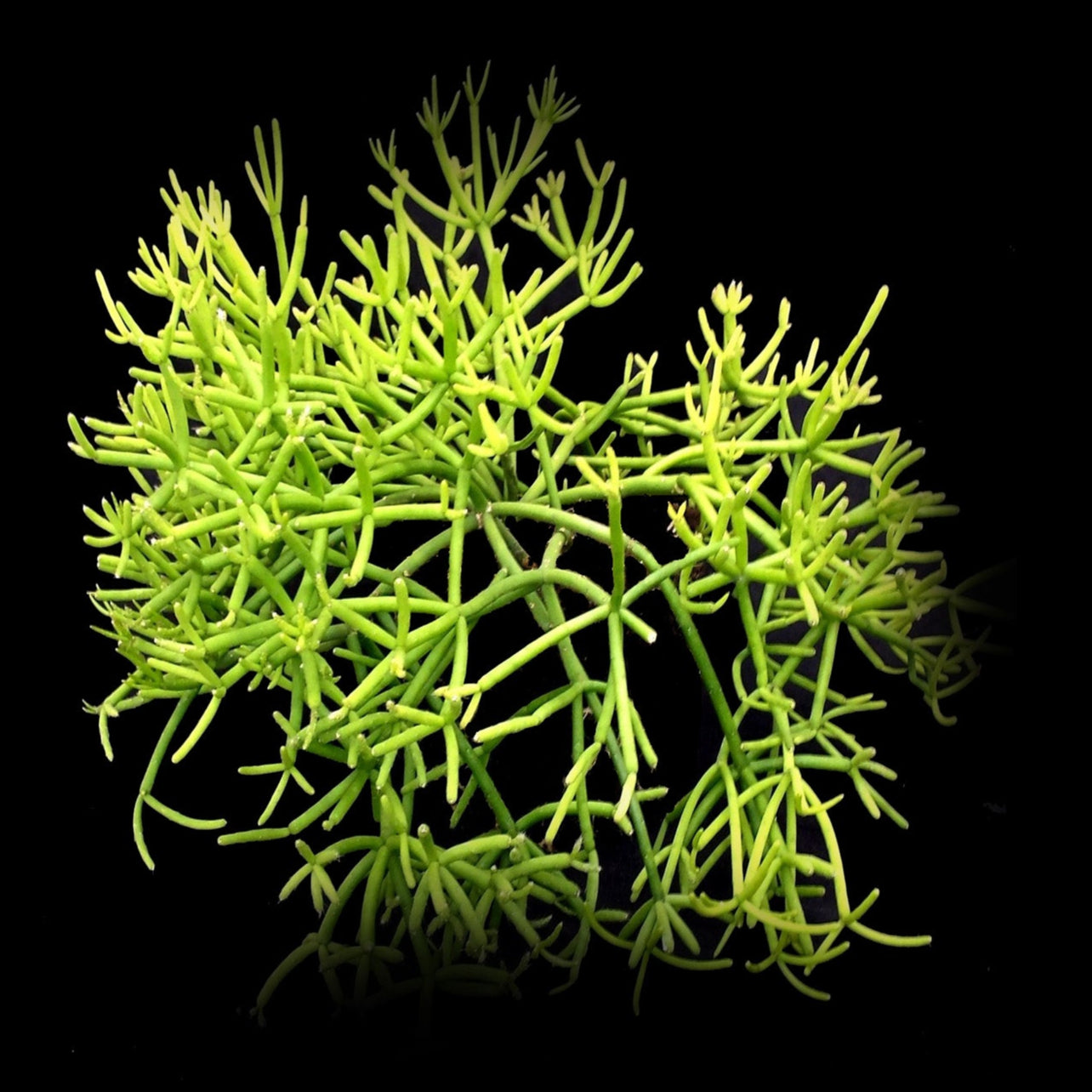
types of mistletoe cactus Rhipsalis teres f. heterocladaRhipsalis teres f. heteroclada is a form of the species Rhipsalis teres in the Cactaceae family, occurring naturally in the Atlantic Forest of Brazil. It grows as an epiphyte on tree branches in warm, humid forest habitats, where it receives bright, diffused light and benefits from regular rainfall and good air circulation. The forest canopy provides protection from harsh midday sun while maintaining high humidity. This form is characterised by
Rhipsalis teres f. heteroclada is a form of the species Rhipsalis teres in the Cactaceae family, occurring naturally in the Atlantic Forest of Brazil. It grows as an epiphyte on tree branches in warm, humid forest habitats, where it receives bright, diffused light and benefits from regular rainfall and good air circulation. The forest canopy provides protection from harsh midday sun while maintaining high humidity.
This form is characterised by slender, cylindrical stems that may branch irregularly, creating a loose, cascading habit. Stems are green, smooth, and segmented at the joints, often producing adventitious roots where segments meet. Small, white to pale pink flowers appear along the stems, typically in spring or summer, followed by translucent to whitish berries.
In cultivation, Rhipsalis teres f. heteroclada is well suited to hanging baskets or mounted culture, where its trailing growth can be displayed to full effect. It requires consistently moist but well-drained conditions and protection from strong, direct sun to maintain healthy, green stems.
Care Tips:
- Light: Bright, filtered light; avoid prolonged exposure to strong midday sun.
- Water: Keep evenly moist during active growth; reduce watering slightly in winter while avoiding complete dryness.
- Humidity: Prefers moderate to high humidity; mist occasionally in dry indoor conditions.
- Media: Use an airy, free-draining epiphytic mix containing orchid bark, peat, and perlite.
- Fertiliser: Apply a diluted, balanced fertiliser every 4–6 weeks during the growing season.
- Temperature: Ideal range is 16–28°C; protect from prolonged exposure below 10°C.
- Repotting: Repot every 2–3 years in spring, refreshing the potting mix and trimming damaged stems.
- Propagation: Propagate easily from stem cuttings; allow the cut ends to callus before planting in lightly moist mix.
Shipping Notes
- Free Standard Shipping on $100+ Orders to the USA.
- Except Preorder products are shipped in 48 hours.
- Delivery to the USA:
- Standard Shipping : 3-10 business days
- If time is of the essence, please consider selecting expedited delivery for faster service.
Exchange/Return Notes
- We offer a 30-day return/exchange service after receiving.
- Final sale items are not eligible for returns or exchanges.
- To process your return/exchange, please contact us at [email protected]
- Please click here for more details>>> Return & Exchange Policy